Showing posts with label Manaiakalani. Show all posts

Friday, 11 August 2017

GEGNZ Student Summit


Today our learners had an awesome opportunity to present at the GEGNZ Student Summit!
For months now, our learners had been preparing their presentations to share with other learners from around the country (Yes, country! There was a school that had come all the way from Rotorua to participate!) This was Stonefields first time at the Summit (this year's was the second summit, ever).

Group 1 consisted of some proud creators of a video game in the making called Undecided, who shared their process of the game creation thus far, covering how they use the game development platform, Blender as well as programmes such as Blender to create the models they use in their game. Not only was it super informative, the boys had also made it hands-on by allowing their workshop participants to play their game. The workshop was such a hit that they passed the 25 participant limit and we unfortunately had to turn people away.


Group 2 shared a bit about Breakthrough at Stonefields and how they used that opportunity to organise a whole school disco with some amazing parent help. Definitely not an easy feat, but executed smoothly all the while having fun!


Although the learners weren't fast enough to get into their first choice of workshop (Google Cardboard/Robotics and Character development) the role of presenting was invaluable for them. After the summit we took a moment to reflect about what we thought went really well and what we thought would have worked a lot better in terms of their presentations. The main learning that came from it was to be able to have the opportunity to practice in front of a live audience so that you can hear the awkward silences, the bits where you might be facilitating game play while 15 odd people wait to play etc etc. So proud of the team and an amazing job to the organisers - One keynote speaker Suan Yeo from Google Australia was particularly inspirational, challenging the audience to find a problem and solution to something they were passionate about.

The only downside would be was that we didn't book tickets fast enough and they sold out! So we weren't able to get non presenters to go along. Next year for sure! And hopefully more presenters, too!

Friday, 21 October 2016

The question of courage

Term 4. Beginning Teacher survival mode is slowly being turned down and finally, finally, I feel I have some space in my mind to explore concepts and ideas  that would otherwise be subconscious beliefs manifesting themselves into my teaching practice. Today’s digital immersion session gave us the opportunity to reflect on the importance of engagement and the levels of engagement of which we provide to and receive from our learners. A 2 minute video of Chrissie Butler (Core education) talking Universal design for learning, challenged me instantly - we often default to teaching the way we learn - but who is to say that the way we learn is the way that others learn, as a matter of fact, we all know IT’S NOT! The challenge then is to design learning where a range multi-modal access points to the learning is provided so that no matter how learners prefer to learn, they can.

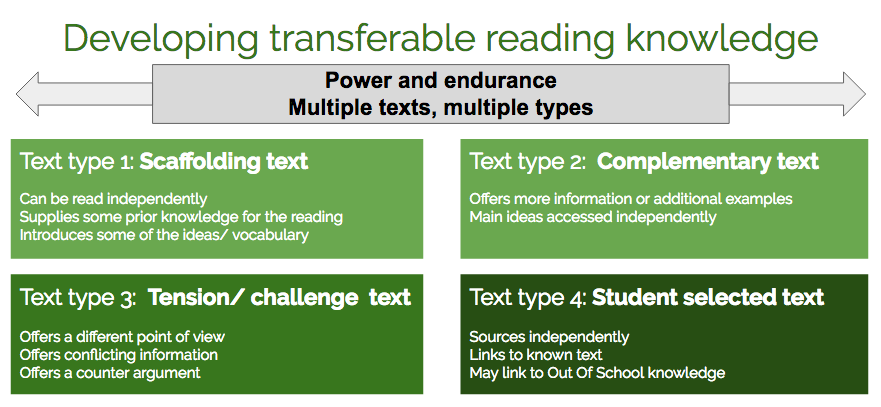
True to Manaiakalani pedagogy, we were given some time to CREATE to make meaning and apply our understanding of the elements we explored today. For those of us who felt like we already had behavioural engagement were given the challenge to achieve a learning resource which incorporated the following levels of text:  

When our Hub returns from Camp, we will be exploring the concept of courage, growth mindset as well as the concept of ‘dispositions’. In practicing creating a resource which covers the above elements, I decided to collate resources which explored the concept of courage in a range of different concepts. Below is a screenshot of the site page so far - will reflect on the unit along the way. Stay tuned!


Friday, 2 September 2016

Filming for the Manaiakalani Film festival

I had a lecturer at university who always used to say...

"You don't know what you don't know until you know it"

My peers used to get annoyed but I loved the truth that was in it! As you might have guessed, this was my experience when Filming for the Film festival. We had been prepped in every way possible by Dorothy, but I still had no idea what I was in for!

I had the storyboard all mapped out, the props, the timetable of shooting, the sounds I would use...

What I hadn't anticipated was...

  • The ability levels of my actors
  • The haircuts they would get (we filmed over a number of days)
  • The different shirts they would wear (short polos and then a long sleeve)
  • The weather! 
  • The technology breaking down (microphones not working)
  • Learners being away
  • The giggles throughout filming!
  • The wind
  • Finding time to re-shoot scenes when they don't work out the first time (or second or third time)

I guess my main learning in all of this is to be as organised as possible, test your equipment BEFORE you start shooting, get as much shooting done in one day to ensure continuity across scenes and start as early as possible so you not only have ample time to edit, but also to reshoot!

Really looking forward to editing the footage and creating my first Manaiakalani Masterpiece!

Below is my favourite blooper - so many amazing facials from this aspiring actor! 


Friday, 26 August 2016

5th Annual Manaiakalani Hui

Today the MDTA Cohort was blessed to join in the 5th Annual Manaiakalani Hui. Some of the MDTA decided to capture the highlights of the day through Sketchnoting their experiences, some via their blogs and others, like me, through Twitter! It was a good challenge and a test of my ability to present ideas in a succinct manner, as I attempted to capture the essence of each speaker within the Twitter character limit and avoid the generic "great ideas shared by ..." Tweet. I had to think about which ideas were the most valuable to a) remember and b) share with my Twitter audience!

I used Storify to embed the Tweets I made throughout the day using the hashtag: #Manaiakalani.


With an assignment worth 50% of a paper due last night, and a day full of deep brain stimulation my mind was well and truly inspired and exhausted by the end of the day!

Friday, 12 August 2016

Getting wise with Garageband

Today the MDTA cohort had Rob Wiseman of Point England School come and spend the day. Rob came into the education sector with 6 years of teaching music behind him so we were fortunate to have him as our Garageband guru for the day!


The practical tips I have compiled above have been done so with movie making in mind, with the fast approaching Manaiakalani Film Festival on the horizon. The most important lesson from the day was that you don't have to be musically inclined to create something that sounds good on Garageband or to have high quality voiceovers - as Rob made sure to point out, Apple has created Garageband so that it is user-friendly for the inexperienced, yet has the ability to allow experts to create complex pieces. I am eager to get some filming done so I can have some serious sandpit time with these new skills!

Saturday, 6 August 2016

Sketchnoting - Take 2


Behold, my second attempt at Sketchnoting. Hand on heart, I can honestly say that although more time consuming, thinking of pictures to represent the abstract consolidated those ideas in my mind more so than simply reading notes; not to mention this is a MUCH easier way of reminding myself about what the Summer Learning Journey entailed. See more on this empowering research here.


Friday, 1 July 2016

Tiki tour around the Manaiakalani Cluster

Being a part of the Manaiakalani Digital Teacher's Academy has meant that we are blessed with many opportunities to extra professional learning. One such opportunity happened this week when we were given the chance to visit 2-3 other schools within the cluster.

First the first school visit, Myself and another Teacher of Year 7/8s, Chelsea, decided to check out Tamaki college, to get a sense of the environment that many of our learners would be moving into within the next one to two years. We had been arranged to observe an year 9 English class. As we entered, I noticed the desks were arranged into rows and the teacher stood at the head of the class, behind his desk. I wondered how the learners found this transition, some of them coming from open learning environments, full of colour and furniture that yearned to create opportunities to collaborate; to this room, where they were no longer in Primary but in a hot, baby blue room with desks in rows and the door locked. It all sounds very bleak but it picked up from here. The learners were putting their built knowledge to the test, engaging in a Kahoot about particular functions of certain punctuation, the winner winning an Up&Go, which seemed to be great motivation. 

After this, the learners moved into their reading, using a programme new to the school. This new reading system, the teacher said, had meant that he had seen learners progressing to new levels faster than ever before. The system required learners to take a test, placed them at a particular level and then they were able to choose a book from that level. Upon completing the book, the learner would take a test, with a certain percentage right, the would 'level-up' but if not, they would remain at the same level, until they could pass. The learners could take the test whenever they felt they were ready, which meant that they were working at their own pace. Not to mention, the tests and some of the texts were available online which meant more ubiquity, more visibility, more empowerment. 

I think my main wondering from this mornings experience would be - How am I setting up my learners so that when they get to this environment they can still experience success. How am I designing learning in a way that familiarises them with the way high school will function/is structured, without taking away the integrated benefits of a Primary School setting? 


Friday, 17 June 2016

Inspiring Innovators


I have had an epiphany. At 25 years old, still considered young by many, one would expect that indoctrination in the ways of old, teaching wise, isn't a lived out truth. However the reality is that my journey as a learner through the education system has affected me in ways I wasn't aware of. Until I am challenged by a belief, by myself or by my colleagues, everything is done in an unaware, subconscious machine like manner. The question of purposefulness is one that needs to be asked, and just as pressing should be the questions of what else can I do? and how else can we do it? Comfort is a beautiful, warm and fuzzy feeling thing, yet comfort does not create change.

In a provocation to the University of Auckland, Google Class On Air participants challenged the University to reconsider what effective 21st teaching practices looked like and how they might provide teachers in training with the opportunity to develop these particular skills which compliment effective practice. Innovation.


As Russell Burt, Pat Snedden, Dorothy Burt and company work to move the community of Tamaki from subsistence to a position where they can experience capital growth through education, they have questioned other social aspects along the way - they identified that education needed to change and then they asked, well, why not housing? Why not the health system? Innovation.

To be surrounded by such an unbounded amount of innovation jerks me from comfort and inspires me to take risks in the learning environment in an asserted effort to make learning purposeful and authentic.

It's hard work. It makes your brain hurt. It's not always comfortable (actually, it hardly ever is comfortable!) BUT when purposeful, it creates CHANGE! Feeling so humbled to be in the presence of individuals and collectives who are courageous enough to take risks for the betterment of the tamariki and the wider community.

Friday, 10 June 2016

Screencasts & Accessible Learning

This week in our digital immersion class we used Screen recording in Quicktime player to create screencasts about how our learners and their whanau access their learning through our Hub Google Sites. The video highlights the major digital affordances of a Google site, through the enabling of ubiquitous learning and increased learner agency.


This was my first screencast using Quicktime, however, my learners and I use Screencastify, a screen capture software for Chrome, very often in the classroom. The main way I have used Screencasts as a tool has been to record myself solving mathematics problems and explaining my reasoning and the strategies I have used to do so. My learners have then been able to use this as a resource when they have trouble answering certain questions.

The learners have been using this tool to record their own thinking when solving mathematics problems. One really useful tool within Screencastify is the ability to draw/write on the screen you are recording. This enables learners to record their thinking live. Used in this way, their recordings become authentic resources they can use later for rewindable learning or even for their peers to use.

Friday, 3 June 2016

Inspiring Colleagues


It's hard to believe that two years ago the awe-inspiring world-class innovating Teachers of Google's ClassOnAir were in the same seat as my colleagues and I. Today we had Matt Goodwin come in and share with us some of the technicalities of recording and sharing his pedagogy for his ClassOnAir episodes. Their courage to lay the design for learning that they have created for their learners for a global audience is the ultimate visible learning experience and fulfils the SHARE piece of the Manaiakalani pedagogy by making their plans available for anyone to use, 


giving back to the community by sharing their take on what is effective teaching within their context for their learners. Knowing that we might have the opportunity to do this in a year and a half's time is SCARY but inspiring.

Monday, 16 May 2016

Manaiakalani BT's Connect

Earlier his week our digital immersion day led us to Panmure Bridge School, where we had the opportunity to connect with our colleagues who are also new to the digital 1-1 environment within the Manaiakalani Cluster.

Fiona led the session on learning to create and creating to learn. The first creation required us to work in groups, creating an advertisement for an idea or a product within 15 minutes. Our group chose to sell an idea, the idea of 'take the lid off'. With our teacher lenses on, we interpreted this idea as the act of allowing creativity into the lives of our learners. The following video was the result...


Our second physical creation of the day was encouraged to be a digital artefact an was to be based on our teacher as inquiry focus. I spent all afternoon exploring new digital tools - stop motion animator, animaker and trusted Ol' iMovie, and yet I was unable to decide on which tool to use, having started a project within each of the applications. I reflected on my learning and having had a late night the night before, I empathised with my some of my learners - the pressure to create with so many options, not enough ideas and not enough sleep had me feeling exhausted and in all honesty, a little bit stressed! I needed more time. Which is exactly what I had. A few days later, having had a bit more exploration time, I was able to create the following...


Friday, 6 May 2016

Snap Happy

Google Photos - Collage of Maungarei

Todays session had two elements to it. For the first part of it, we explored parts of the Cybersmart curriculum and talked about the difference between being Cybersafe and Cybersmart. The main point of difference for me I guess, was the fact the being Cybersafe has a focus on the preventative measures one should take to remain 'safe' online, where as being Cybersmart focuses on empowering the device user. A point that really stood out for me today was when Fiona Grant was speaking about creating a Smart Footprint. Her point was that when a learner is new to their own device, it is like their own private world, they are understandably, with deliberate teaching, are unaware of how visible every move they make online really is.

The second element of today was the focus of using still images and the accessibility and transfer of these from and to iPhones and Macs. We explored Google Photos and the creation of collages, as well as the ease of creating photo slideshows with Youtube. The collage is comprised of images I took of Maungarei and the youtube Slideshow...well, please view to see!


I am looking forward to utilising this new skill of creating REALLY EASY Youtube Slideshows to put on our Hub site as well as sharing this new knowledge with my learners!

Friday, 1 April 2016

Thinking critically about current events


This has taken me far too long, but I finally got there! Here is a snapshot of the first decent looking site I have created. Presenting... the Manaiakalani Current Events site!


The MDTA Cohort was assigned the task of creating a site which would be used primarily by teachers of learners at year 2/3 to year 9 at High School. The site aims to provide a clear structure to address Current events in a way that encourages critical thinking through the exploration of different perspectives. The great thing about this site is that, should you not care for the content within our pages, the HTML of the page has been attached at the bottom of each page as an RTF (Rich text file), making this layout accessible to all!

The need for this site was brought about by a current teacher of Year 9 Social studies at Tamaki College, Auckland. Wanting to cover current events in his class but struggling to get depth from his learners, one teacher came to us in his quest for improvement.

The pages within this site have been designed to appeal to learners of all kinds, providing information about an issue through a range of media i.e. Videos, audio files, pictures, and articles. By breaking content into bite-sized pieces, the pages within our site seek to make exploring perspectives much more accessible through multi-modal prompts.

True to Manaiakalani 'Learn, create, share' pedagogy, each page suggests a form of creation to come from the perspectives the pages prompt exploration of.

Something that I found quite challenging, asides from the fun technical difficulties to do with HTML, was choosing the content to put on my page, as I didn't really have a clear idea of what it was I wanted my learners to come out of the sessions with. Once I painted a more vivid picture of what it was that I wanted them to explore and consider, I was able to add and delete content more purposefully.

The designing of this site prompted me to think about how often I provide quality and unique opportunities for my learners to create. It also gave me really practical skills to use when creating a site! Probably the most valuable thing I took away from this task has been my level of engagement. When the task was introduced, I was almost wriggling in my seat, rearing to go, I just wanted to get started. The ownership, the motivation, the engagement, it was all there; it got me thinking "is this how I am making my learners feel? If not, what can I do to make them this excited to get stuck into it?"

I am very much looking forward to working on my next site, stumbling through problems, problem-solving, and emerging victorious! (with other people's help, of course).

A few posts ago, I mentioned how HTML seemed a whole world away. Look at us now.

Friday, 18 March 2016

Field Trip to Stonefields

As part of our Digital Friday Immersion classes, the MDTA gathered with 60 other educators from around the Manaiakalani cluster as part of the Manaiakalani School Leaders Study Tour. As it happened, this took place at Stonefields School, my workplace.

For me, the tour was a slightly different experience. As I am blessed to be in that learning environment all the time, I wasn't focusing so much on the logistics of what was going on. Without my 'teacher' hat on, I noticed the focussed students, engaged in their learning yet also really eager to share it with others. I noticed the teachers equally engaged in the rich interactions, and spoke to a few teachers who were bubbling with excitement about the authentic learning being born out of 'Breakthrough'. The last thing which was a highlight for me was the opportunity to see the tamariki that I am with all day, everyday in a different context. I was in awe of their ability to 'step-up' and become leaders, of their obvious humble pride in sharing the great things about their school.

Year 7/8 Learners participating in the Q & A Panel

As well as the physical tour of Stonefields, the leadership team supplied mini tours of their conceptual understandings or their 'meaning making' in regards to certain aspects. My favourite workshop was one on Culture and Collaboration, which briefly touched on/posed questions such as "what makes a teaching team hum and buzz?" "How do we deal with elephants in the room?" and "What is my mental model of conflict and how did that come about?".

A really important point I took away from that workshop was that conflict can be better thought of as an opportunity for growth, an opportunity to do something better or be better at something. That although some conversations are hard to have, having them allows for changes to be made and relationships to grow stronger, evidently through stronger relationships comes better teachers. In essence, if we have conflict in our spaces, be it big or small, we need to have the hard to have conversations so that we are better equipped to teach our learners. Ultimately, we are all teachers because we are individuals who want to be agents of change. It is only through the releasing of the ego can we achieve much much greater outcomes. Below is a short, yet effective and provoking video about individual mindset shared at the Culture and Collaboration workshop. Well worth watching!


Friday, 11 March 2016

Creating to Learn - The importance of creative expression

The pedagogy of Manaiakalani "Learn, Create, Share" for me is quite often thought of as a linear process, as I often hear the words in that order and that order alone. This morning's session reminded me that this is not the case; Dorothy helped to unpack this understanding by asking what opportunities we provided for our students to learn through creation. Within these first few weeks it has been easy to default to 'what are we learning, what can we create to show this learning and how and where can we share it?', when in fact in reality it is far from this linear thought process. In thinking more deeply about what opportunities I provide for learners to engage in learning through creating, I see I have not been as slack at it as I had originally thought. Of course, through the process of creating, learners can consolidate knowledge and gain knowledge or understandings along the way. Overcoming obstacles and reflection, whether through self-reflection or questioning from others, allows individuals to learn during the creation process.


One wondering that I have often had, I think due to the high number of texts read throughout University that emphasise the importance of creative expression in Education for our Maori and Pasifika learners is, is how relevant is this to Pakeha learners in high decile Schools? How significant is this 'creative expression' to these learners? When in fact some research has said that the traditional school system works in favour of the dominant Western culture. Is creative expression part of the traditional school system? (Not my opinion, just a wondering based on what I was fed during Under-grad studies). I guess the fact is that from what I have seen so far, all learners, regardless of their ethnicity or culture, love to create things, so many different things, after having learnt something, they love to create things to show their learning and now that I think about it, they are always learning when they are creating, whether it be content knowledge or new skills.

From here, my next steps are to be mindful of the opportunities I am providing for students to learn through creation, to think outside the box when thinking of 'creative expression' and to start to rewire my brain from seeing learn, create, share as a linear process to a complex, intertwined, cycle.

Monday, 29 February 2016

A Visit from Pat Snedden

Last Friday the 2016 MDTA were blessed to have a visit from Pat Snedden, the Executive Chair of the Manaiakalani Education Trust. His korero was short but it had such a humbling and motivating impact on each and every person in our cohort. Pat shared a brief amount of New Zealand History which gave massive insight into the disabling effects of the displacement of Māori land


This disabling effect has been generational and has affected our learners. As teachers, we are here because we care. More importantly, as educators in Tamaki, it is our job to enable learners, the citizens of today and tomorrow, to be able to articulate their wants and their needs, to be able to identify what those are, and most importantly, give them the skills they need to be heard. We need to give them the skills of communication. 


Pat made a really crucial point in saying that we educators are not starting from the bottom. There have been many teachers before us who have had the courage to seek change, to make a difference for the Tamariki of Tamaki. It is important that we do not get caught up in our egos but rather, realise that we are here to serve the learners and not only that; we need to have the humility to realise that we also serve those teachers who came before us and all those who have fought so hard to change the educational experience of Māori and Pasifika children. 


Friday, 26 February 2016

An Official Google Certified Educator!


Carefully considering my answers with the help of my nutritious snacks
After two hours of answering multi-choice questions and completing tasks such as creating Google forms, docs, and sheets...


...I am officially a Google Certified Educator! I even learnt some things along the way! I would definitely recommend anyone who is already confident with Google Apps for Education to sit their exam! Only Level 1, but officially on the board!


Friday, 19 February 2016

Creation of Manaiakalani pedagogy

To kickstart our Digital Immersion session this Friday, Dorothy explained how Manaiakalani was brought to fruition. 

Many years ago, the Manaiakalani cluster lumbered through much deliberation surrounding what made an effective and engaging Literacy programme for their learners and the pedagogy of 

Learn, Create, Share 

was born. 

It was soon discovered that not only was this approach to teaching and learning applicable and effective in the area of Literacy, it could also serve to make significant shifts in all curriculum areas. 

Digital Upskilling: Google Sheets and Google Forms

In Digital Immersion this week we delved a little deeper into how to use the Apps Google Sheets and Google Forms, as well as having a play around with Add-ons to use within Google Sheets (there are so many Add-ons!).

As part of our learning we made a quiz on Google Forms, which as some of you may or may not know exports all the individual input to a single Google Sheet! Using the Add-on Flubaroo in Google Sheets we were able to take any number of answers, set the default (correct) answers and then Flubaroo went ahead and marked all of the answers for us!

Another part of our learning this week was sharing the ways in which our schools (previous and current) use these apps. Some of these innovative ways sheets are used are:

  • Student progression sheets - A table format for students to inform their next steps, and a place to link in their evidence to justify their understanding of a specific progression. 
  • A booking system where students can book in a time with the teacher to get more support in a particular subject.
  • Weekly timetables
  • A place for students to link their blogs so that Teachers can access all of the blogs from one place
Some ways Google Forms are used in the classroom are:
  • Collecting Student voice
  • Collecting Student prior knowledge

That was all in a few hours! I am really looking forward to taking the time to explore these apps further. The 'creation' part of todays session was to have another play with Google Draw and create another graphic representation of the days learnings and wonderings. My reflective question for the day was "How can I use these tools to manage existing documents and information more efficiently?" so not only thinking about what amazing and innovative new things I can come up with, but also think about what I already have in place and how I can improve them using these tools.

Digital Immersion: Week 2 Reflective Graphic 

Friday, 12 February 2016

The learning never stops!

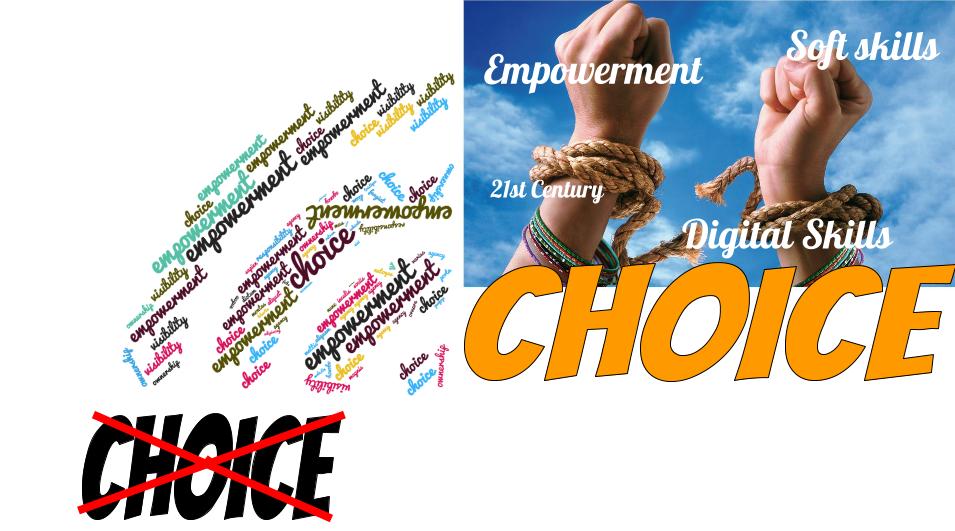
Today the MDTA cohort experienced their first of many Digital Immersion classes with the wonderful Dorothy Burt and Anne Sinclair. Nearing the end of our class we were asked to create a graphic reflection using Google Draw which illustrated what learning and/or understandings resonated with us from the time spent together. The piece I created is below.


The bottom left of the picture represents the lifestyle which many of our families come from; where financial limitations breed a limitation of choice and a lack of agency within their lives. The middle of the picture, the wordle in the shape of a wifi bandwidth, symbolises the use of the digital tools in the classroom to help us Teachers in our quest to empower learners, but also acts as bridge to take learners and whānau from having no choice to being empowered with an abundance of choice, having soft skills and being technologically savvy; essentially being able to thrive in the 21st century.

Looking forward to next Friday's creative venture!